You've developed a skincare product you're excited about, and now you want to build a brand around it that does it justice!
Maybe you've even had a go at creating a logo in Canva, but it's looking a little... homemade. You have bigger ambitions for your business. You want a product range that feels luxurious, a brand that customers are excited to invest in, and perhaps one day, your own boutique store or a place on the shelves of your favourite retailers.
But how do you get from a logo you've put together yourself to a polished, cohesive skincare brand that looks and feels the part?
How do you create a skincare brand that looks less like this... 👇
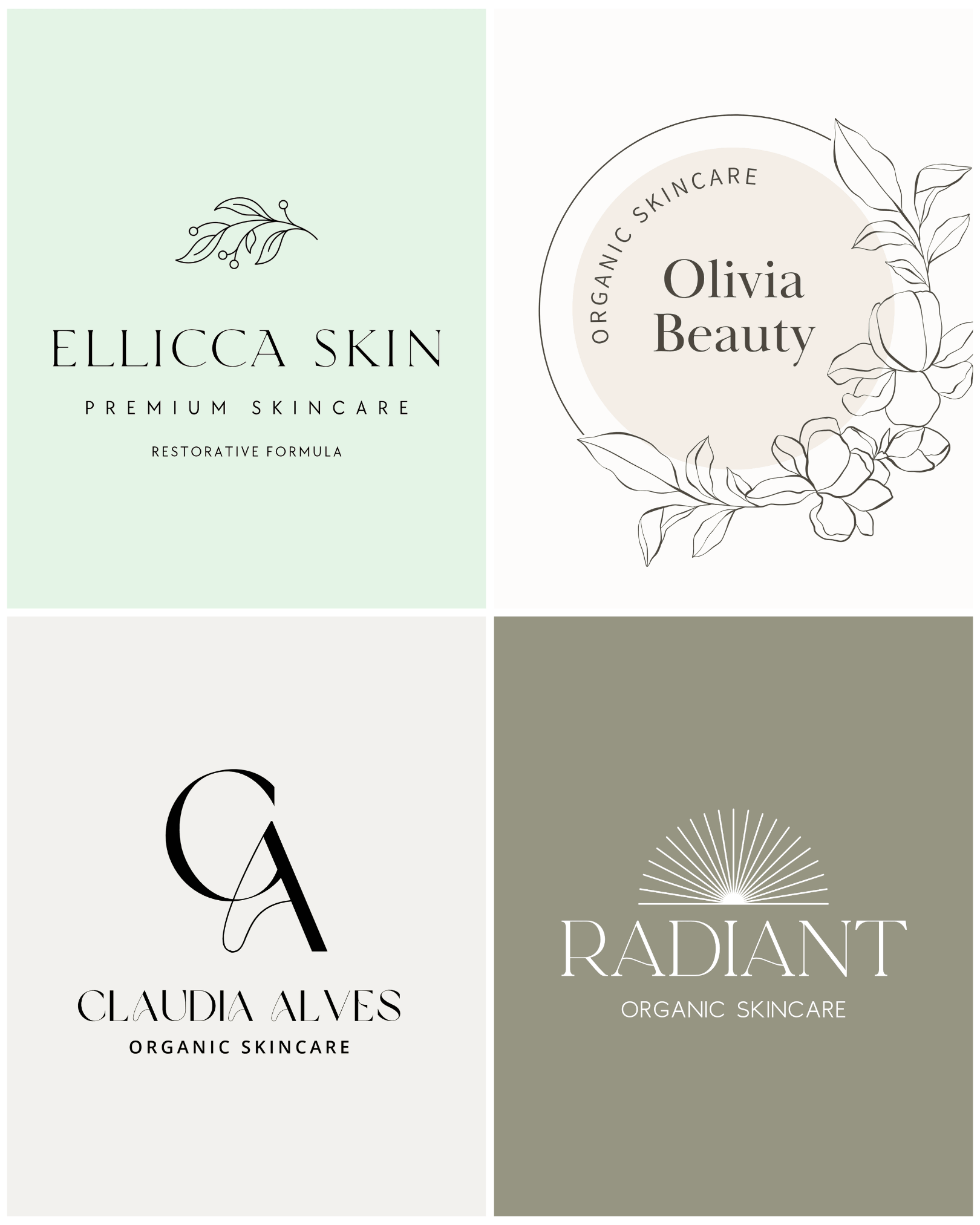
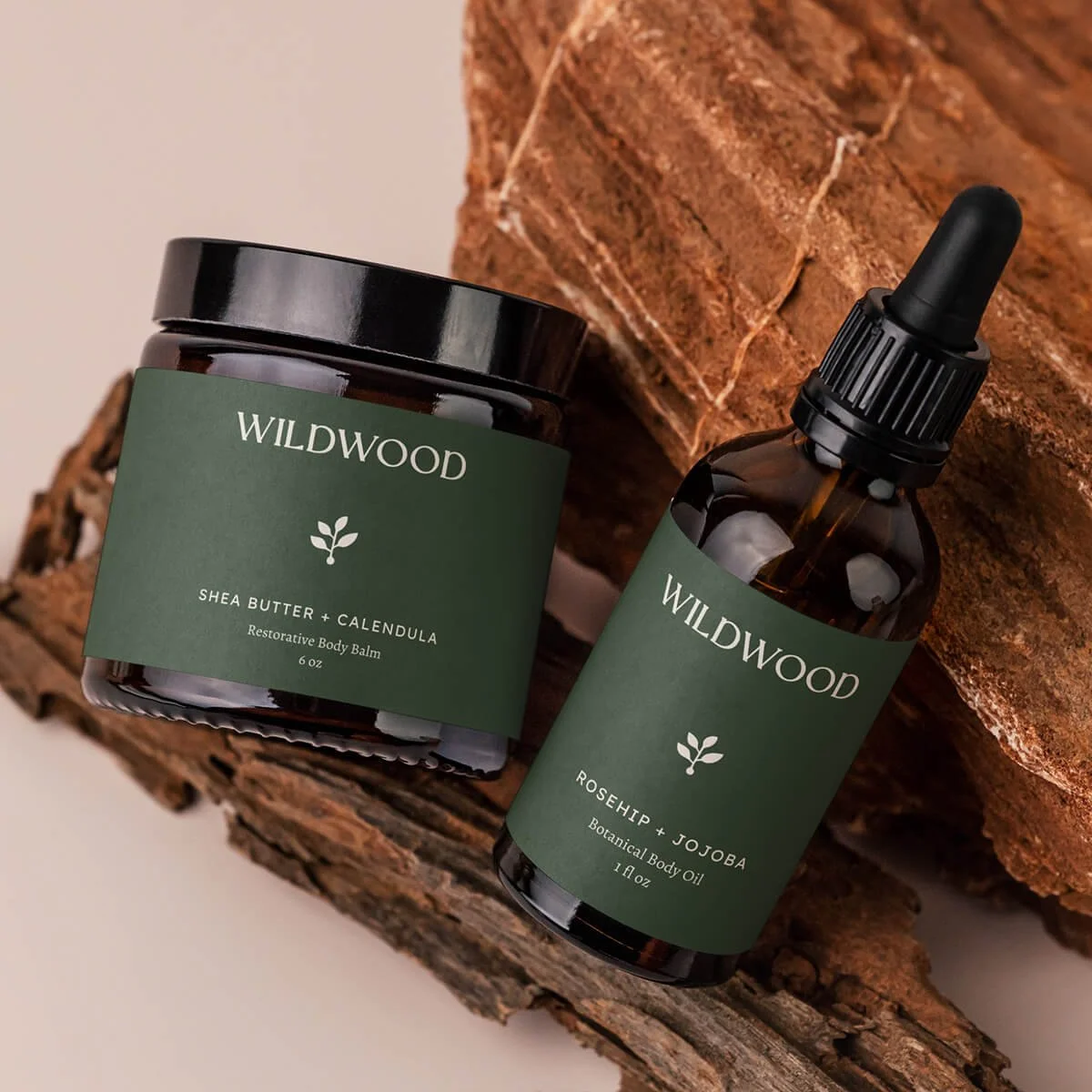
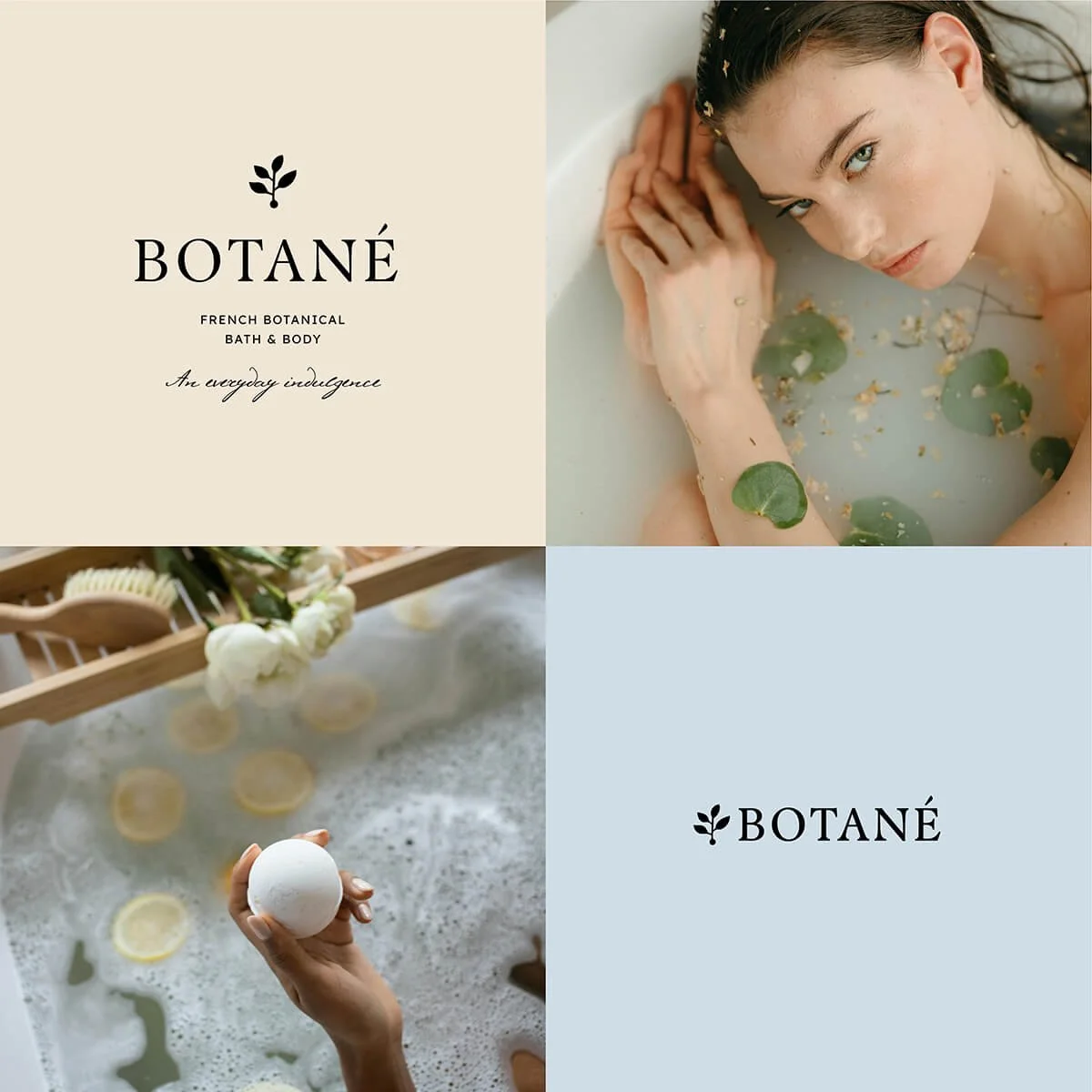
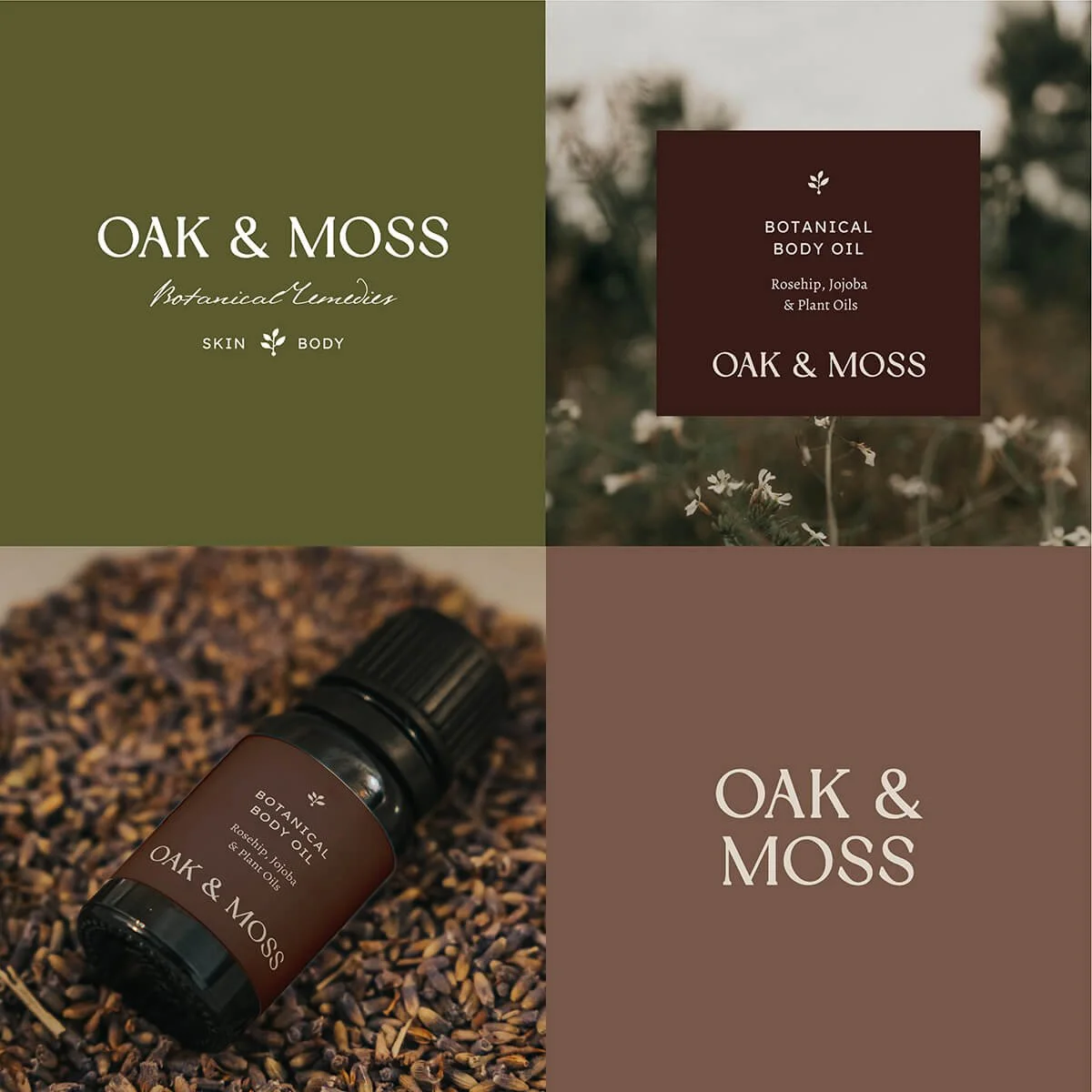
…and much more like this? 👇
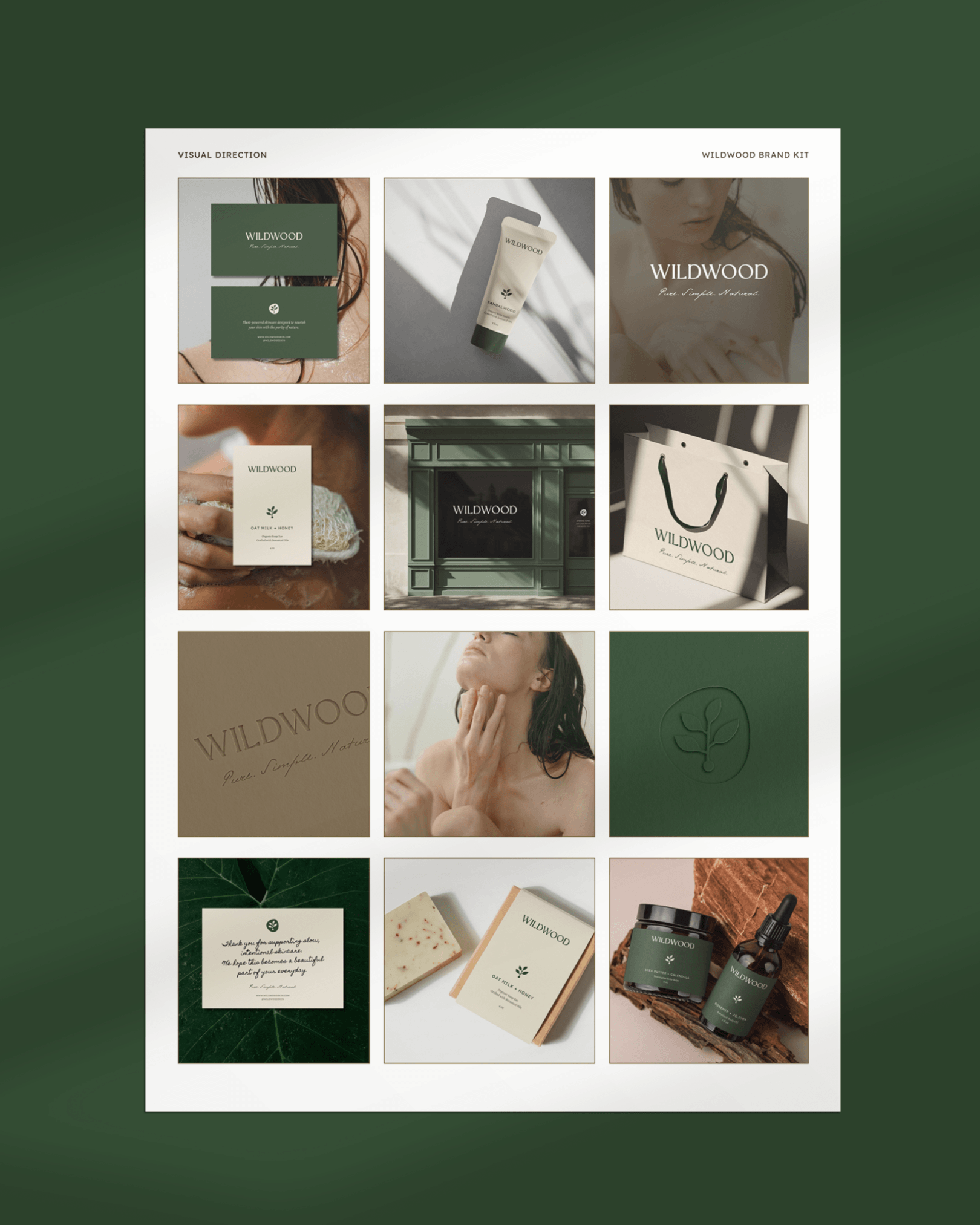
A premium-looking brand isn’t just having an expensive logo design, it's about bringing together the right colors, typography, imagery and graphic elements to create a consistent identity that works across every part of your business.
In this guide, we'll explore the essential elements of a luxury skincare brand identity, and how to bring them together to create a brand that feels every bit as special as you've imagined!
1. Start with a clear vision
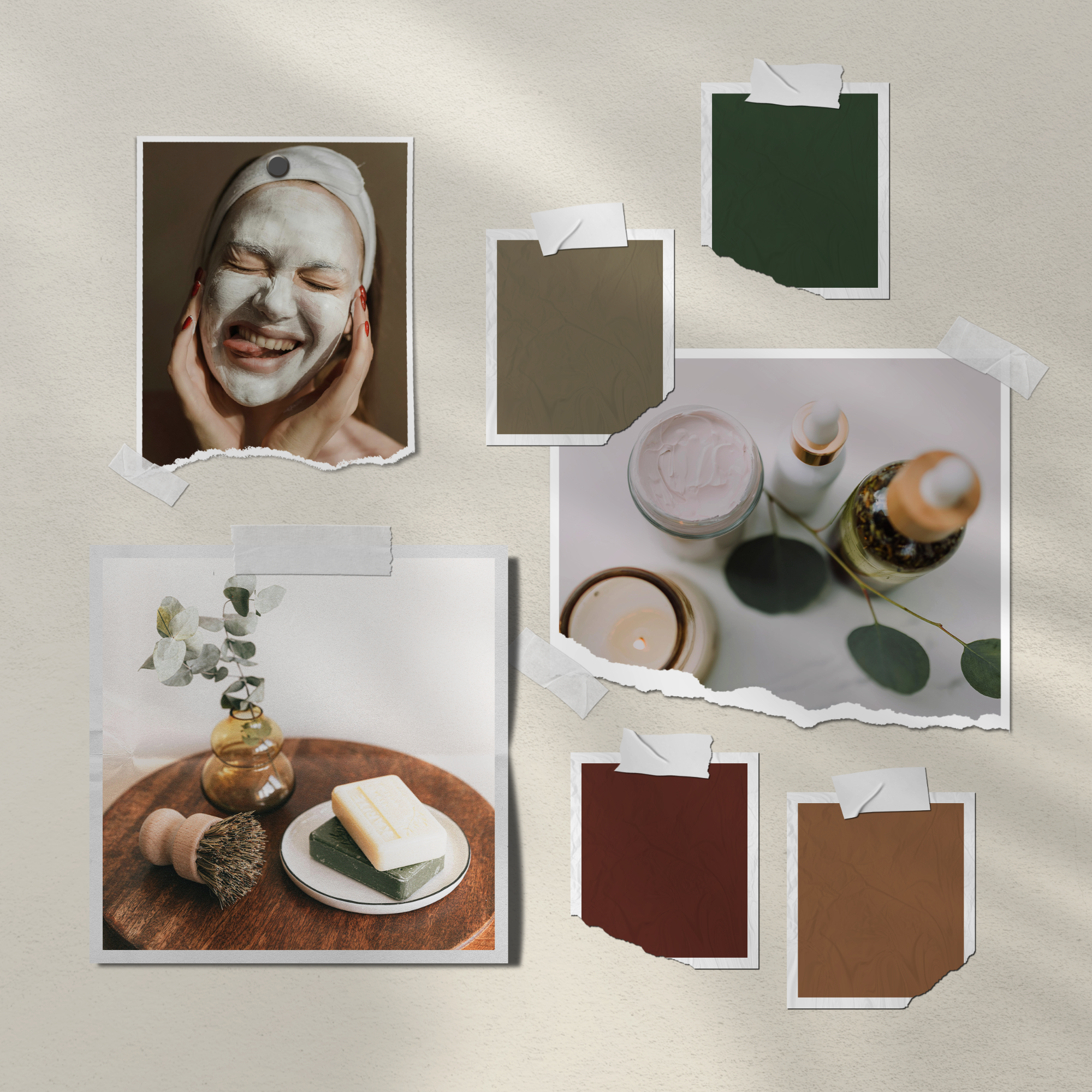
If you've ever spent an afternoon scrolling through Pinterest looking for branding inspiration, you'll know just how easy it is to fall down a rabbit hole… One minute you're saving beautiful botanical packaging, the next you're drawn to moody editorial photography, minimalist typography and warm, earthy color palettes. Suddenly, you've got a mood board full of completely different styles, and no idea how to bring them together!
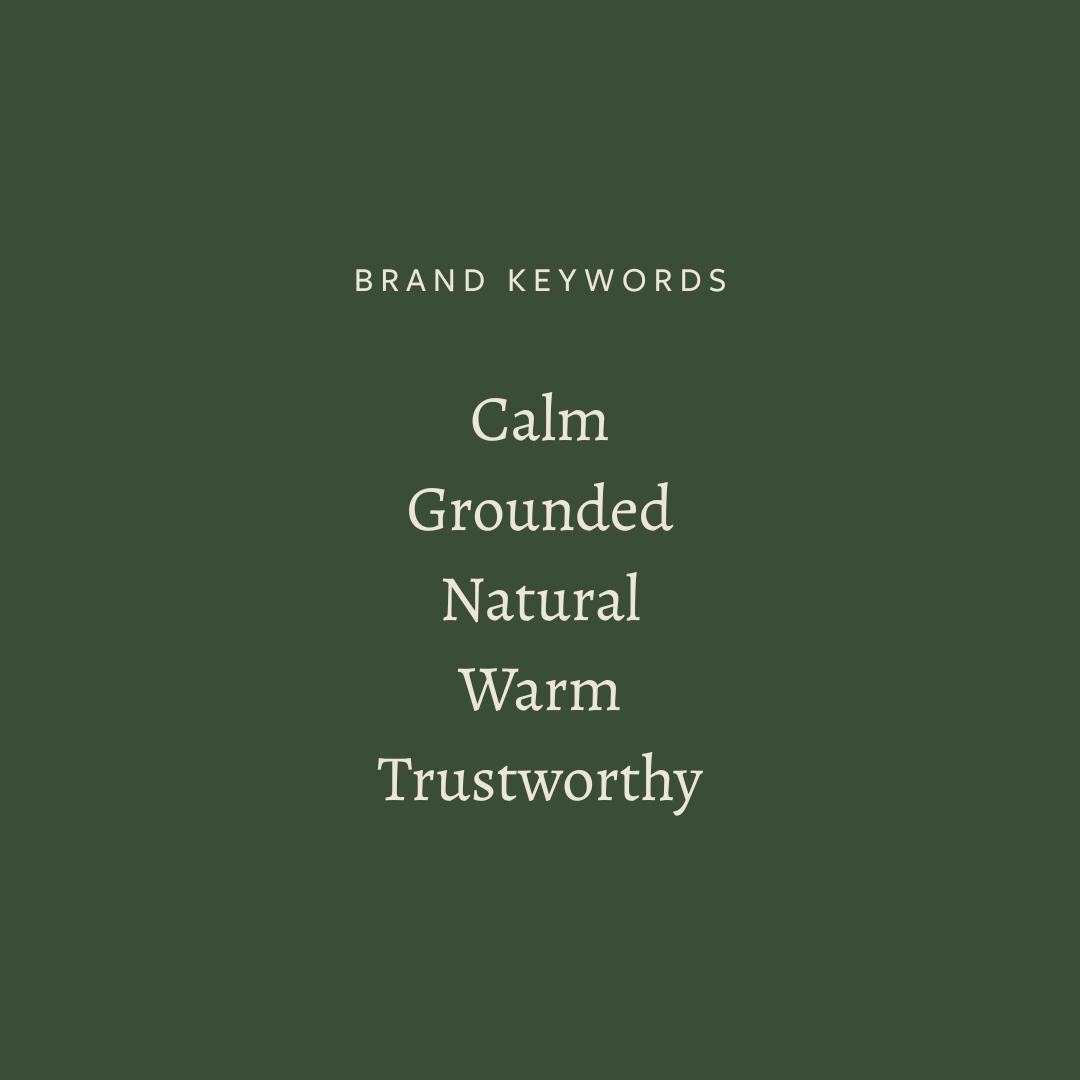
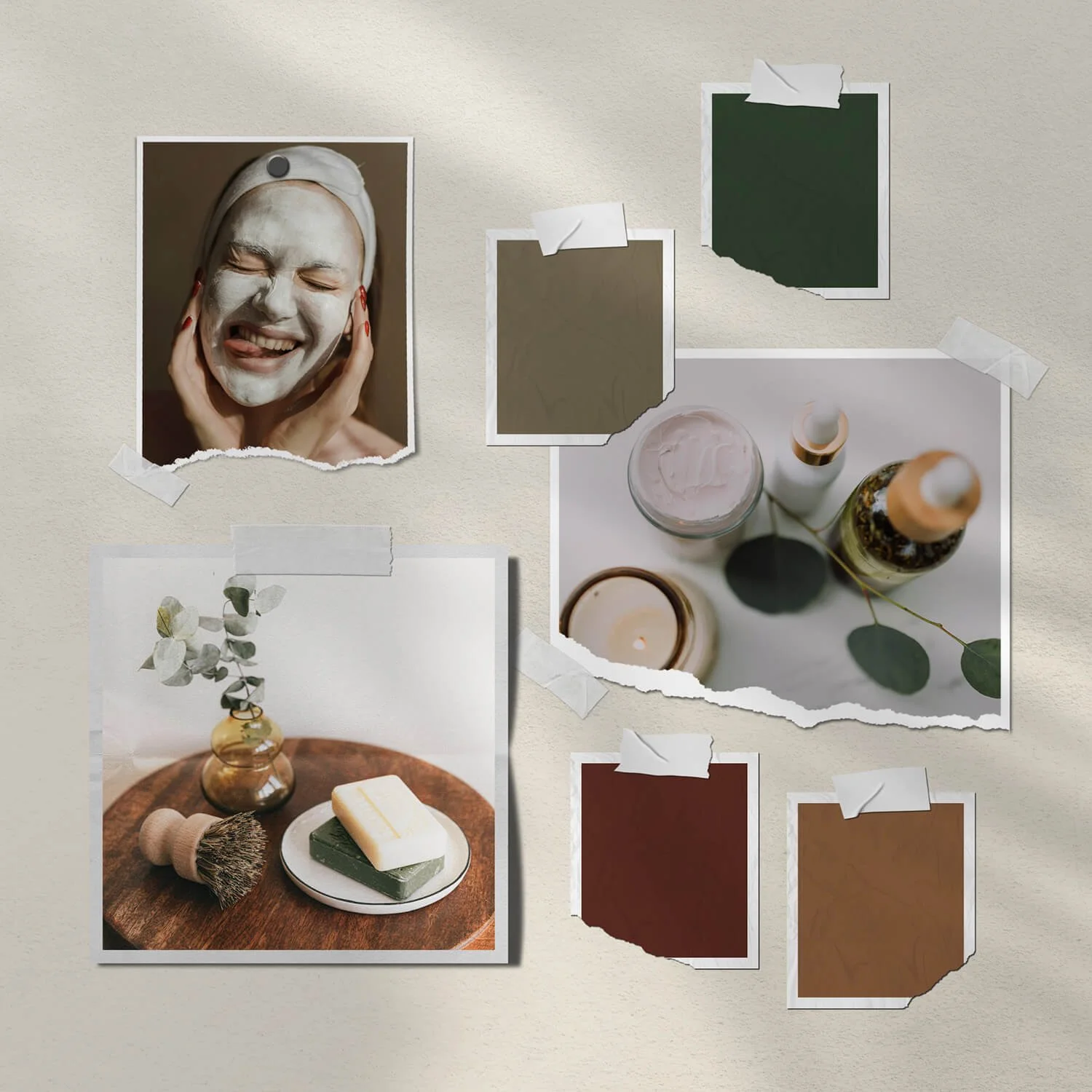
The trick is to remember that not every style you love is necessarily right for your brand. Before you start choosing colors, fonts and logos, it's worth taking a step back and thinking about the kind of brand you actually want to create, and more importantly, who you're creating it for.
Get clear on your ideal customer
Who are they? What are they looking for in a skincare brand? What kind of products do they buy, and what would make them feel drawn to yours? Understanding who you're trying to reach is an important first step in creating a brand that resonates with the right people. If you need a little help with this, take a look at my guide to defining your ideal client, where I walk you through how to get to know your audience and what makes them tick.
Then develop your visual direction
Once you've got a better idea of who you're targeting and the kind of brand you want to create, you can start narrowing down your inspiration and developing a visual direction. If you're struggling to pull all those ideas together, I've also written a guide on choosing a brand aesthetic that attracts the right clients, which takes you through how to find a look and feel that works for your business.
2. Create a logo suite
The next step is probably the part you think of first when it comes to branding: designing your logo!
But here's the thing, you're not just going to have one logo. A well-rounded brand identity typically includes a logo suite, made up of three different variations, each designed for a different purpose. If you're not familiar with the different types, I've got a whole guide on the three logo variations every brand needs.
Why does this matter? Well, trying to squeeze the same logo into every space isn't always going to work. A long logo might look great across the top of your website, but not so great when it's squeezed into a small social media profile image or printed onto a tiny product label. Having a few variations gives you the flexibility to use your branding across different sizes, layouts and materials, while keeping everything looking consistent.
Here's an example of how a logo suite might look:
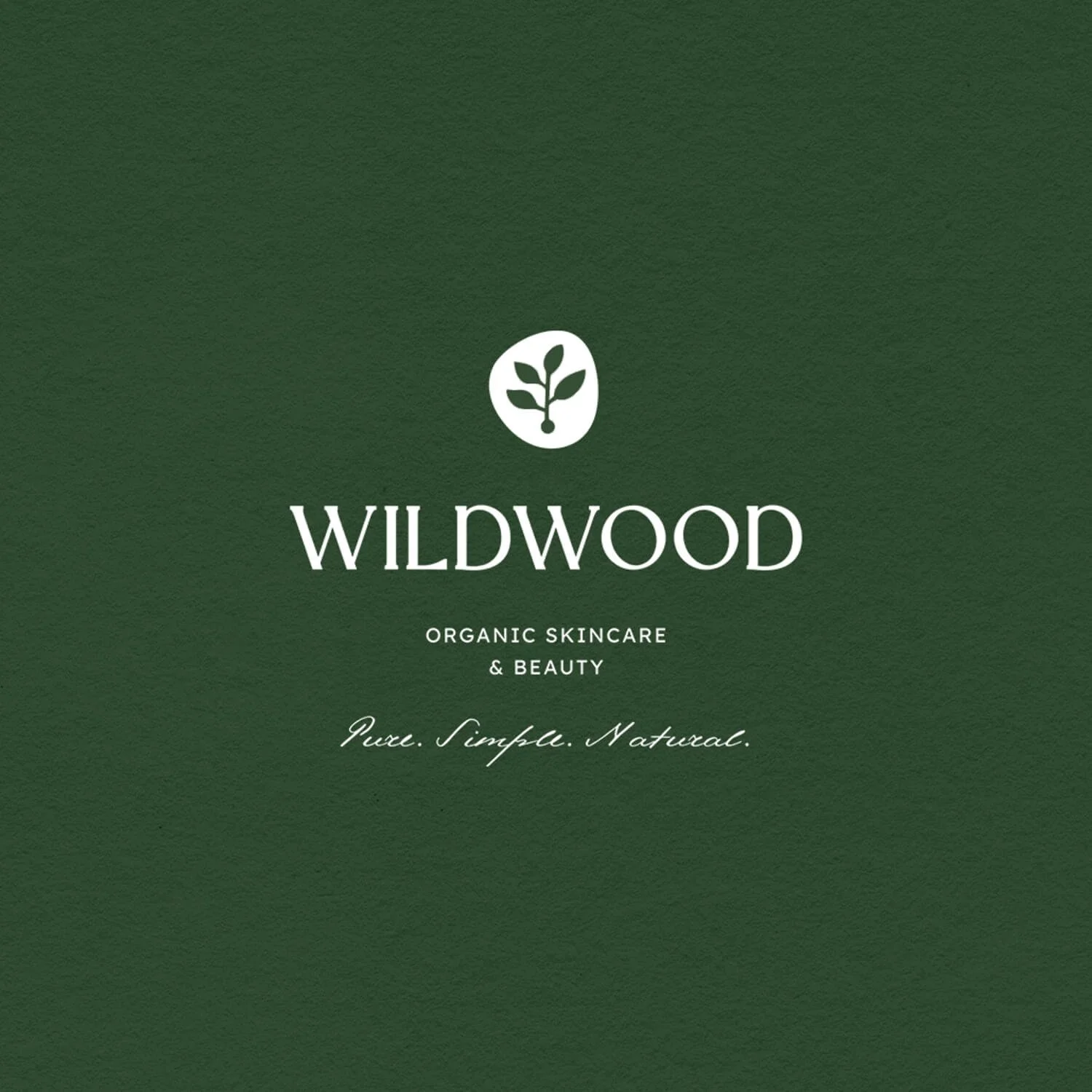
Primary Logo
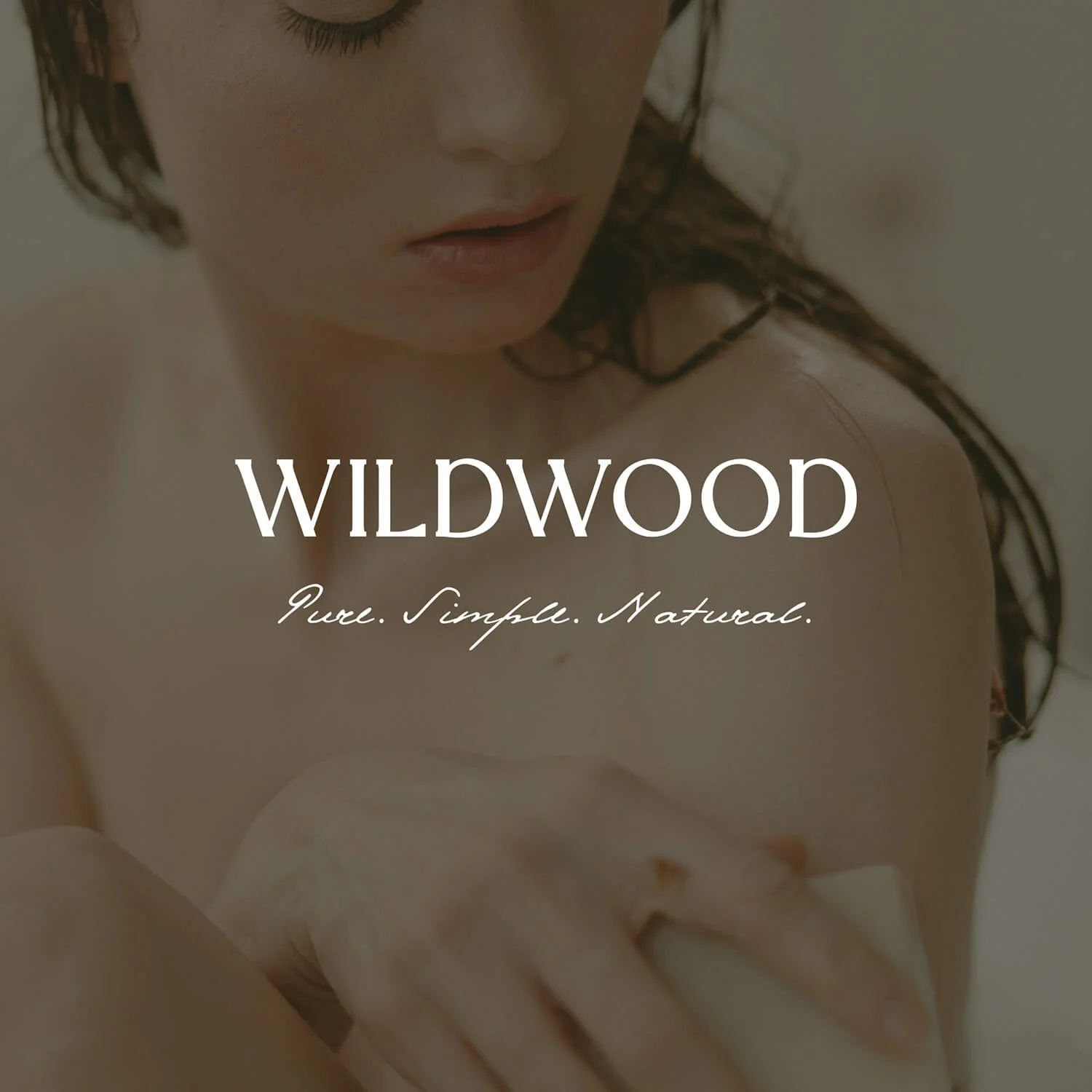
Secondary Logo

Submark
One element in particular that I wouldn't overlook, is the submark (sometimes referred to as a brand icon). This is typically the most compact version of your logo, which might be a monogram, botanical symbol or small emblem inspired by your main logo.
It's especially useful when space is limited, such as on a small product label, sticker or social media profile image. But it can also become a recognizable little detail that you use throughout your packaging and wider brand materials.
It's one of those elements that's often missed when creating your own branding, but an extra detail that help take your identity beyond a basic logo and give it the more polished feel you'd expect from a premium brand.
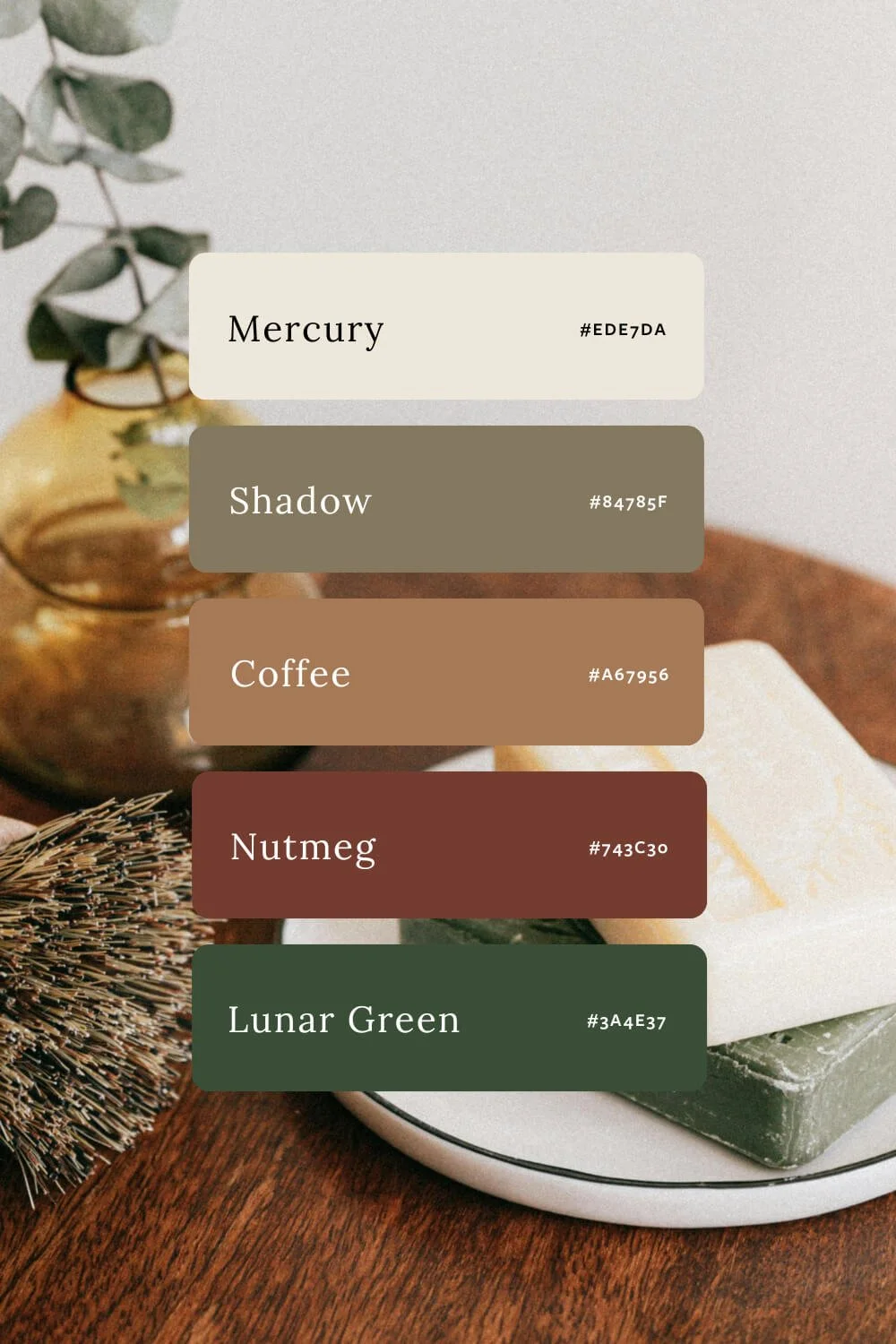
3. Select your brand colors
You know how they say a picture speaks a thousand words? Well, your color palette is the branding equivalent. It helps set the tone at a glance, before your customer has even read a single product description.
When building a premium brand identity, less is often more. Think muted tones over overly bright colors, and remember that repeating the same two or three colors throughout your branding will have a much stronger effect than trying to juggle five or more different color combinations.
Try to think like a designer when choosing your palette. A good starting point is to choose a light and a dark shade. These will be your go-to colors for creating contrast and making sure your visuals are easy to read. Think website backgrounds, text, product packaging and anywhere you need your branding to be clear and legible.
From there, you can introduce a couple of complementary shades to add a little more depth and dimension. These will be your supporting colors, which you can use more selectively to add a pop of color or draw attention to certain elements. Maybe it's a banner on your website, a particular social media graphic or a way to distinguish different products within your skincare range.
I've put together 10 earthy color palettes for wellness brands if you're looking for a little inspiration!
4. Establish a font system
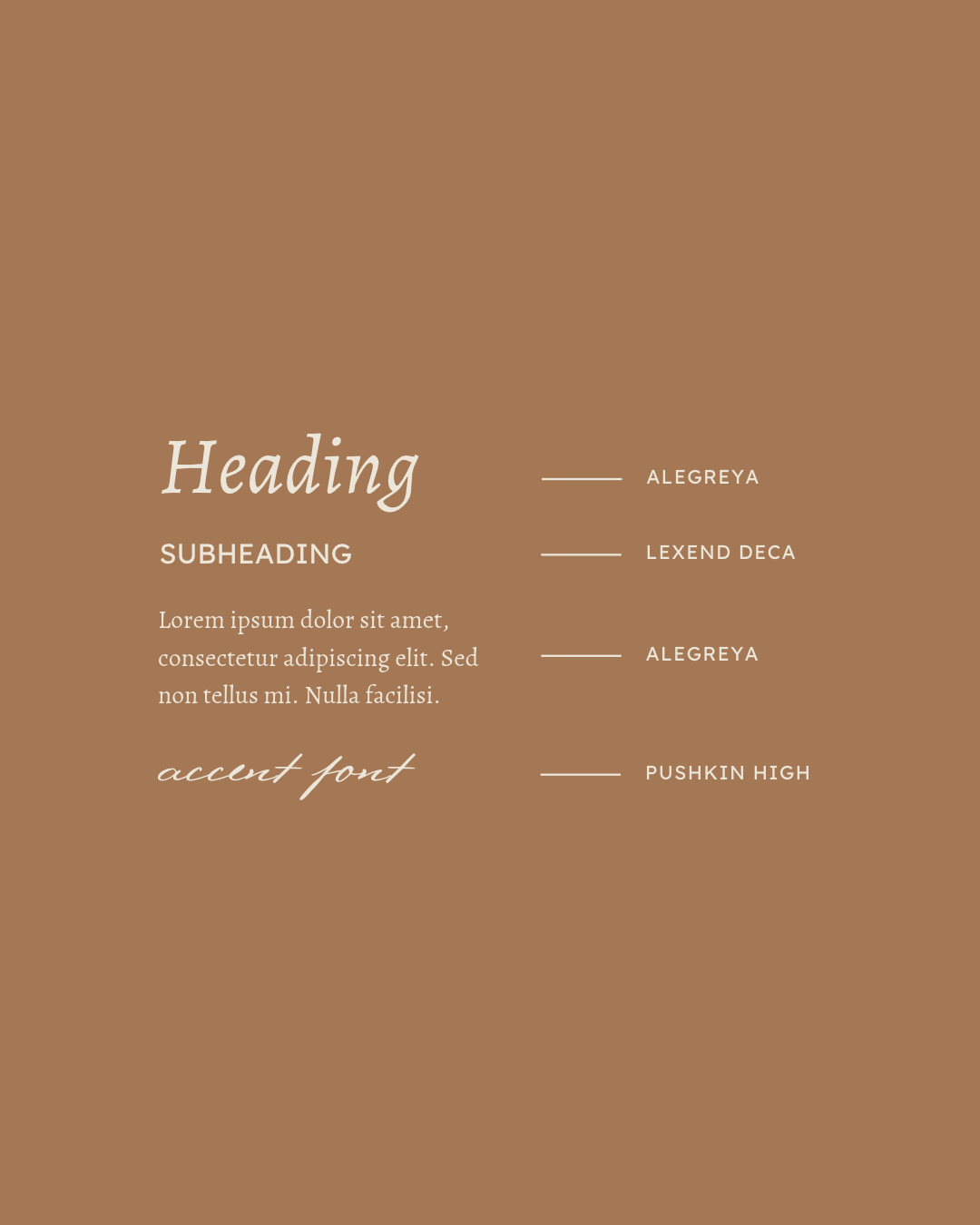
Next up, you're going to pick your fonts. Now, similar to the logos, you're not just going to pick a single font and call it a day. And if I catch you using more than five, I'll be having words!
The goal is to create your own font system, with a small selection of fonts that work cohesively together. Each one has its own purpose, whether that's a statement font for your headings, something a little simpler for body text, or perhaps a more decorative font to add a little personality here and there.
Again, this is something that DIYers often overlook, but fonts make a HUGE difference to the overall look and feel of your branding. Premium brands don't just choose a few fonts and use them whenever they fancy, they have a consistent font system that runs throughout their entire brand.
And yep, that means using the same fonts on the back of your business card, on your product labels, across your social media graphics and on your website. All those little details add up, and when your typography is consistent, your brand feels much more sophisticated.
5. Add supporting graphic elements
Graphic elements aren't essential. There's plenty of premium branding out there that goes for a super minimalist look without any additional bells and whistles. But for the majority of brands, it's definitely nice to have a few extra elements in your toolbox, whether that's branded icons, illustrations, patterns or decorative shapes.
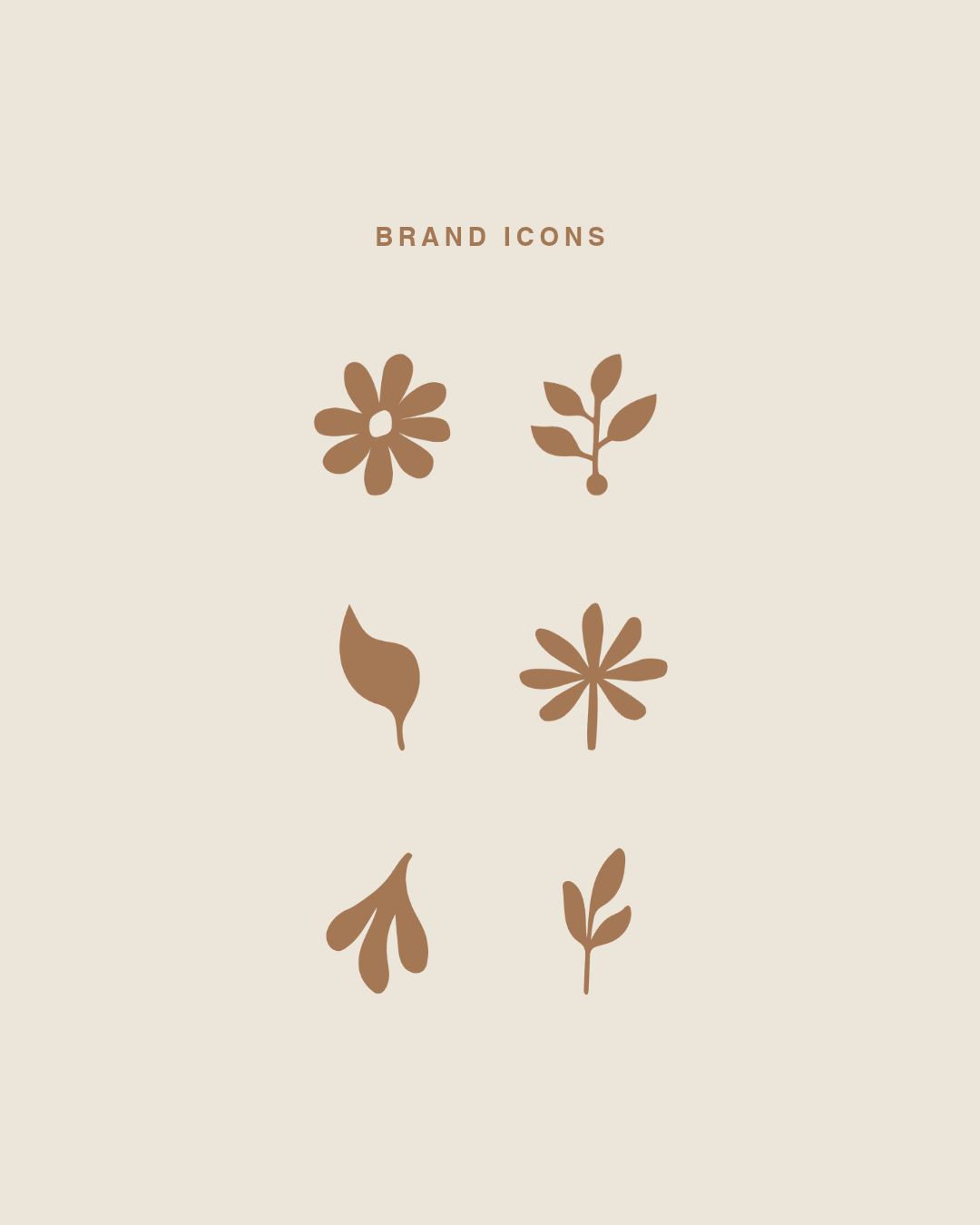
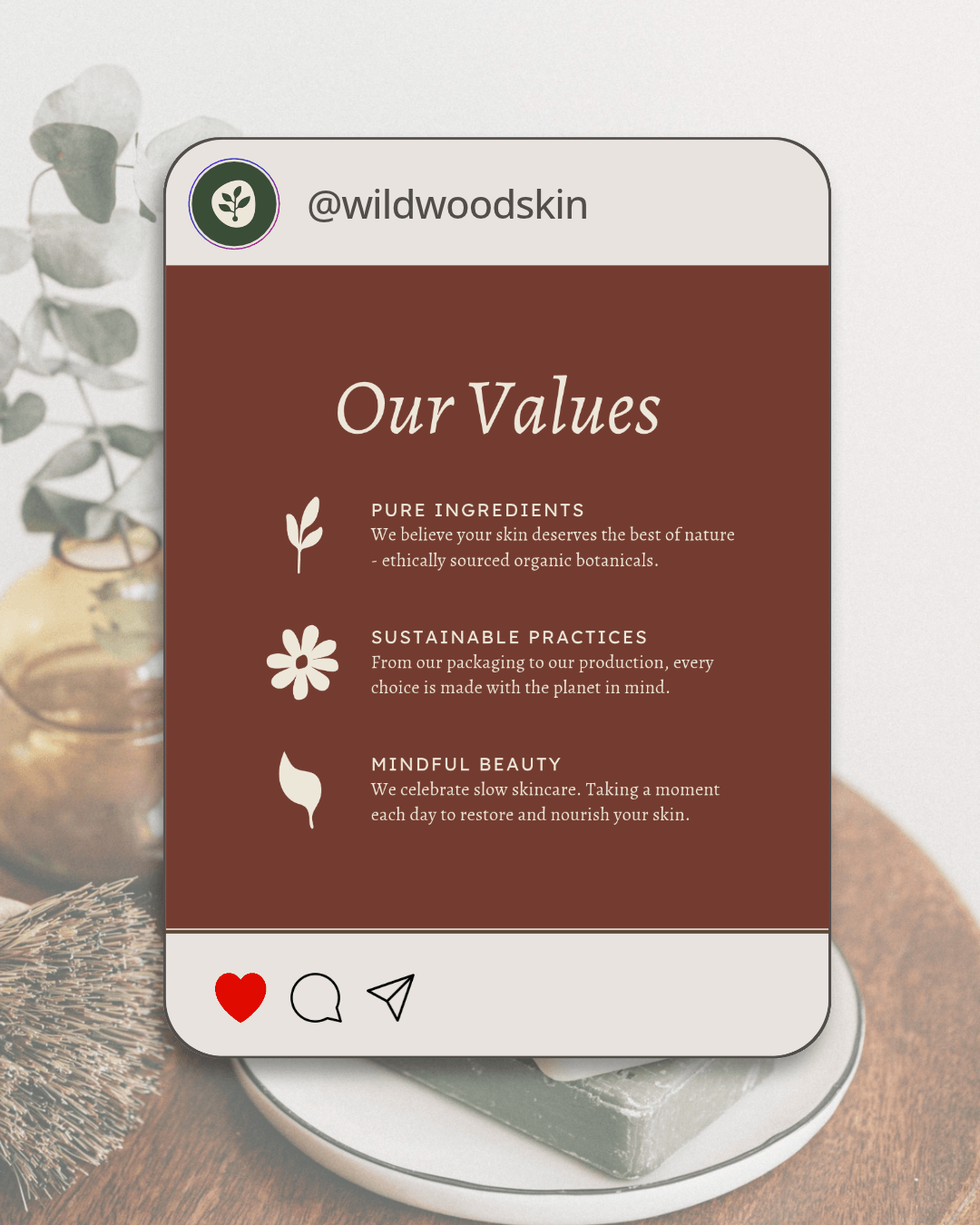
For example, here's a look at some of the supporting icons included in the Wildwood brand kit, along with an example of how you might use them. In this case, the botanical illustrations help reinforce the brand's natural ingredients and complement its messaging.
They're not necessarily the first thing your customers will notice, but these little details can help add a bit more personality and give you something extra to work with when designing your packaging, social media graphics and other brand materials.
6. Choose photography that supports your brand
Okay, unlike graphic elements, photography is a bit of a dealbreaker! You can have the most stunning logos, colors and fonts in the world, but if you're using pixelated, poor-quality images, it's going to undo a lot of that hard work.
Ideally, the best-case scenario would be to have professional brand photography of your products, alongside some lifestyle imagery that helps your customers imagine using them. You’d want beautiful product shots, close-ups of textures, and lifestyle images that capture the look and feel of your brand.
But in the early stages of your business, investing in a professional photoshoot might not be feasible. And that's where stock photography comes in! There are plenty of royalty-free stock photo sites where you can source high-quality images for your brand, my personal favorites are Unsplash and Pexels.

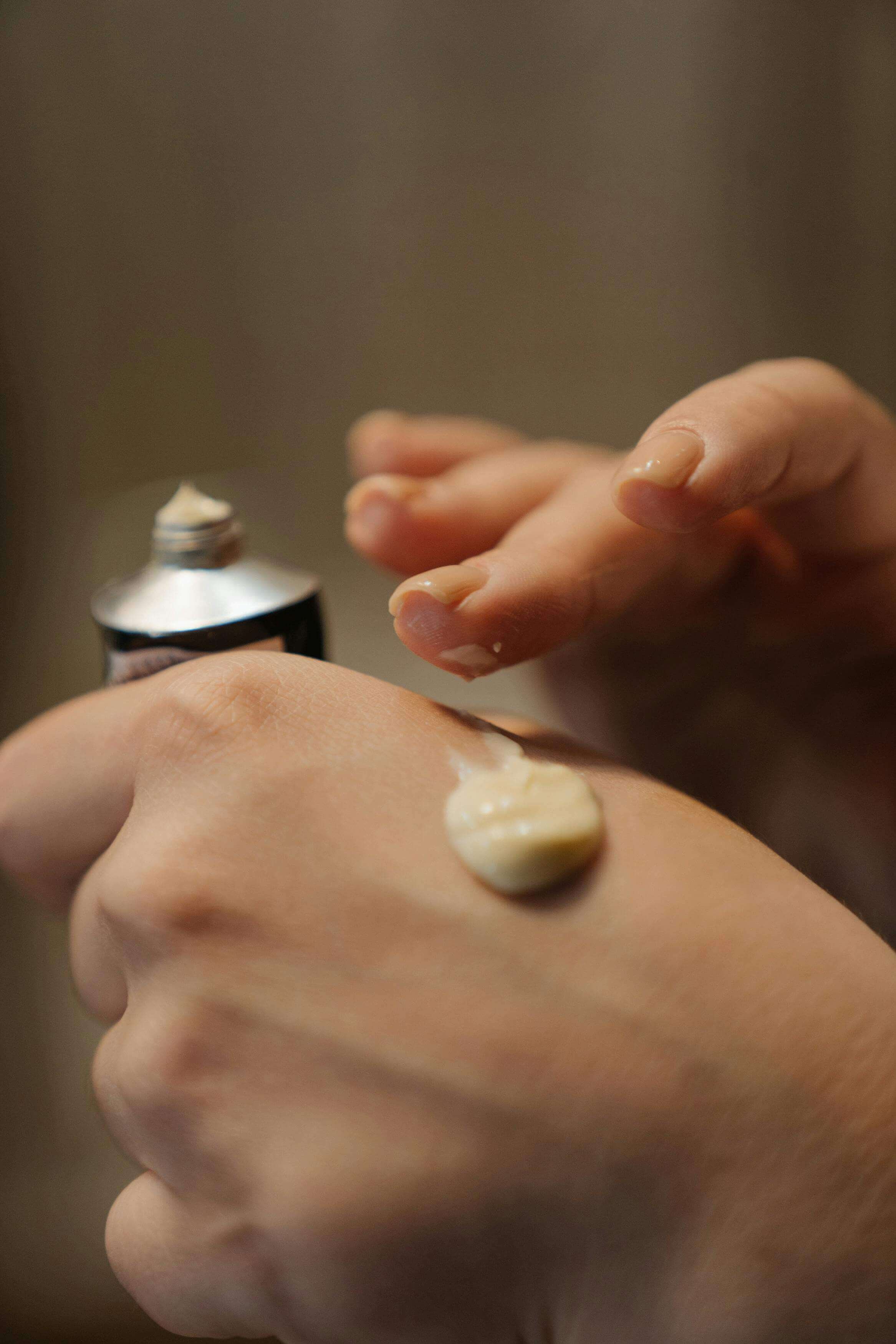


The main thing to consider when choosing your images is whether they fit the overall story you're trying to tell. If you've created an earthy, organic skincare brand, you want your photography to feel like it belongs. Look for images with natural lighting, botanical details, warm textures and soft, muted tones. Not something dark and moody or overly bright and exposed that feels completely out of place with the rest of your branding.
And here's a little tip: if you find an image you love, it's worth checking whether there are other photos from the same shoot. You might find different angles, compositions or details that you can use across your website and social media. Using a collection of images that feel like they belong together will create a much more cohesive look than trying to pull together lots of completely unrelated photos.
7. Create a brand reference sheet
Now that you've got the core elements of your visual identity sorted, you're halfway there! Before moving on to applying your brand, it's worth bringing everything together into a handy reference sheet.
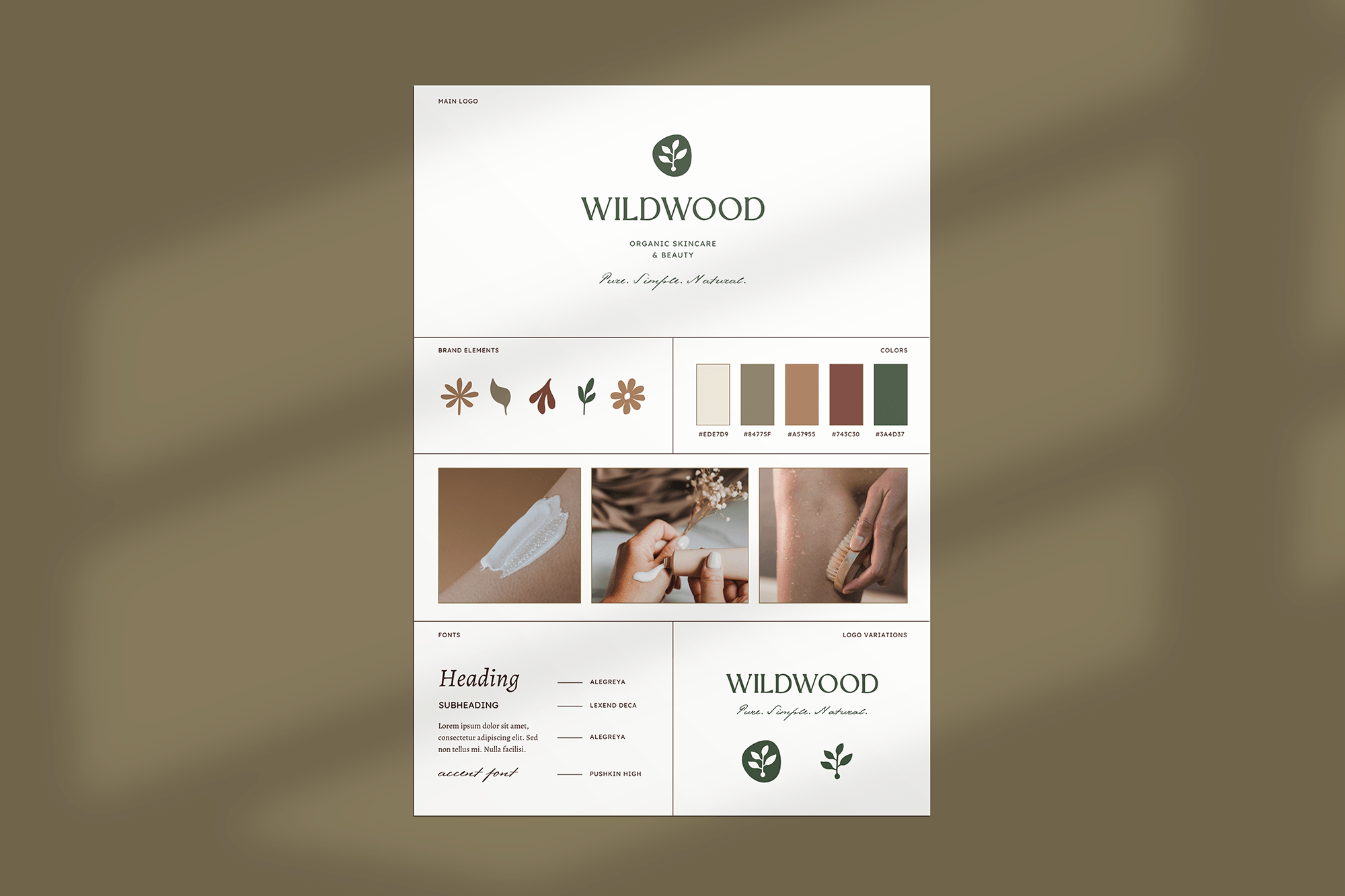
This will give you an overview of your entire visual identity at a glance, with all your logo variations, color codes, fonts and supporting elements in one place.
It's particularly useful for keeping everything consistent as you start creating your packaging, social media graphics, stationery and website. No more hunting around for that exact shade of green or trying to remember which font you used!
8. Extend your branding into stationery
Next up, let's think about stationery. Now, depending on your business, you might not need every stationery item under the sun, but there are a few that are worth considering:
Business cards
Still really useful when it comes to networking, approaching independent retailers or meeting potential stockists. They're a simple way to leave people with something tangible, so they can remember your business and find your contact details later.
Postcards or thank-you cards
A lovely way to add a little extra something to your customer orders. You could use them to include a thank-you message, share care instructions or encourage customers to follow you on social media.
Letterhead and branded documents
They might not be the most exciting part of your branding, but they're worth thinking about too. Particularly if you're dreaming of getting your products stocked by your favorite retailers. When you're reaching out to potential stockists, suppliers or wholesale partners, having professional, branded documents helps you make the right impression from the get-go!
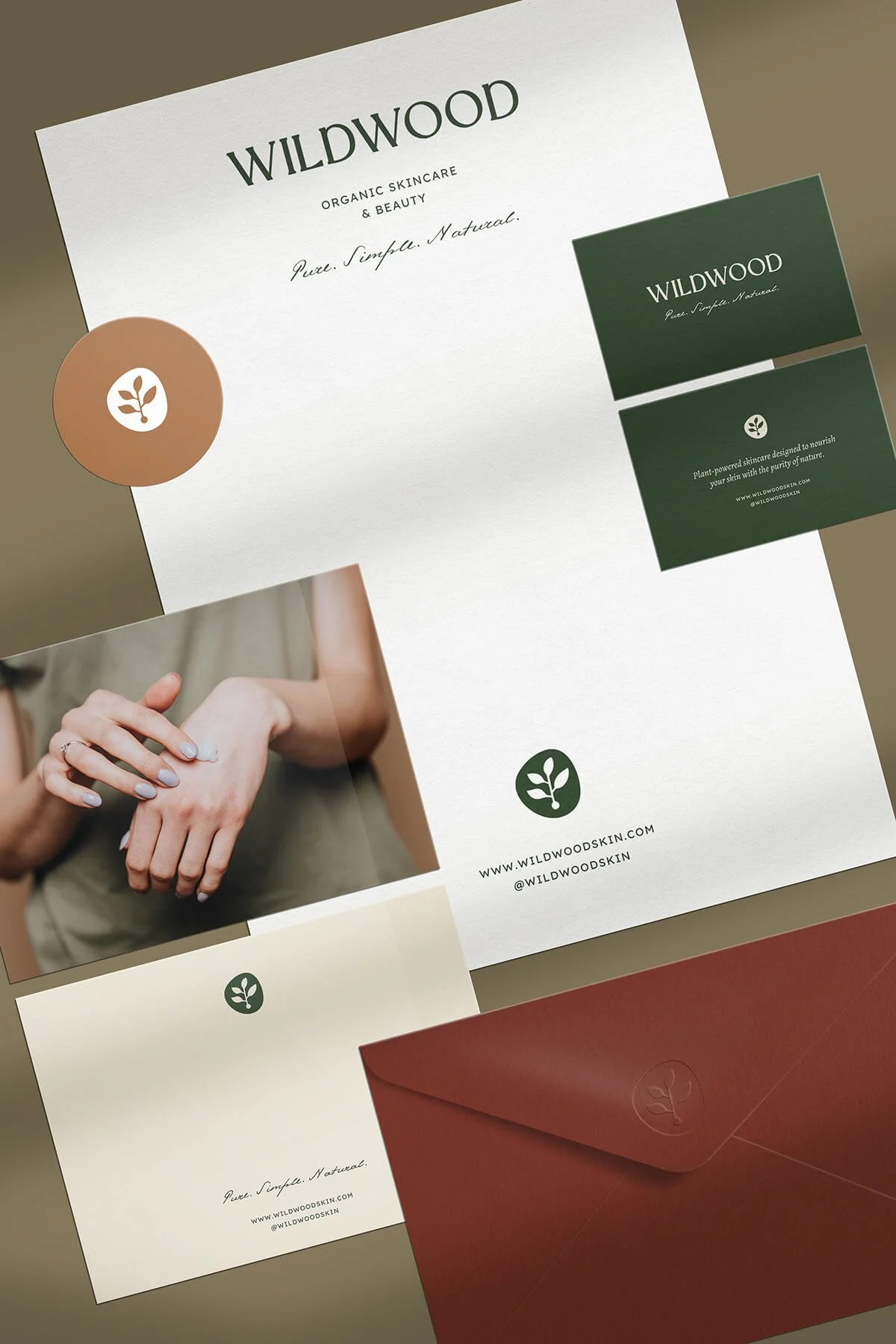
Top tip: When it comes to creating premium-looking stationery, the materials you choose can make a big difference. Think thick, high-quality cardstock and tactile, textured finishes rather than cheap, glossy paper. If you really want to take things up a notch, it's also worth looking into print finishes like embossing and debossing. They can be a little more expensive, but they add a beautiful high-end feel, especially when paired with a simple, understated design!
9. Apply your identity to product packaging
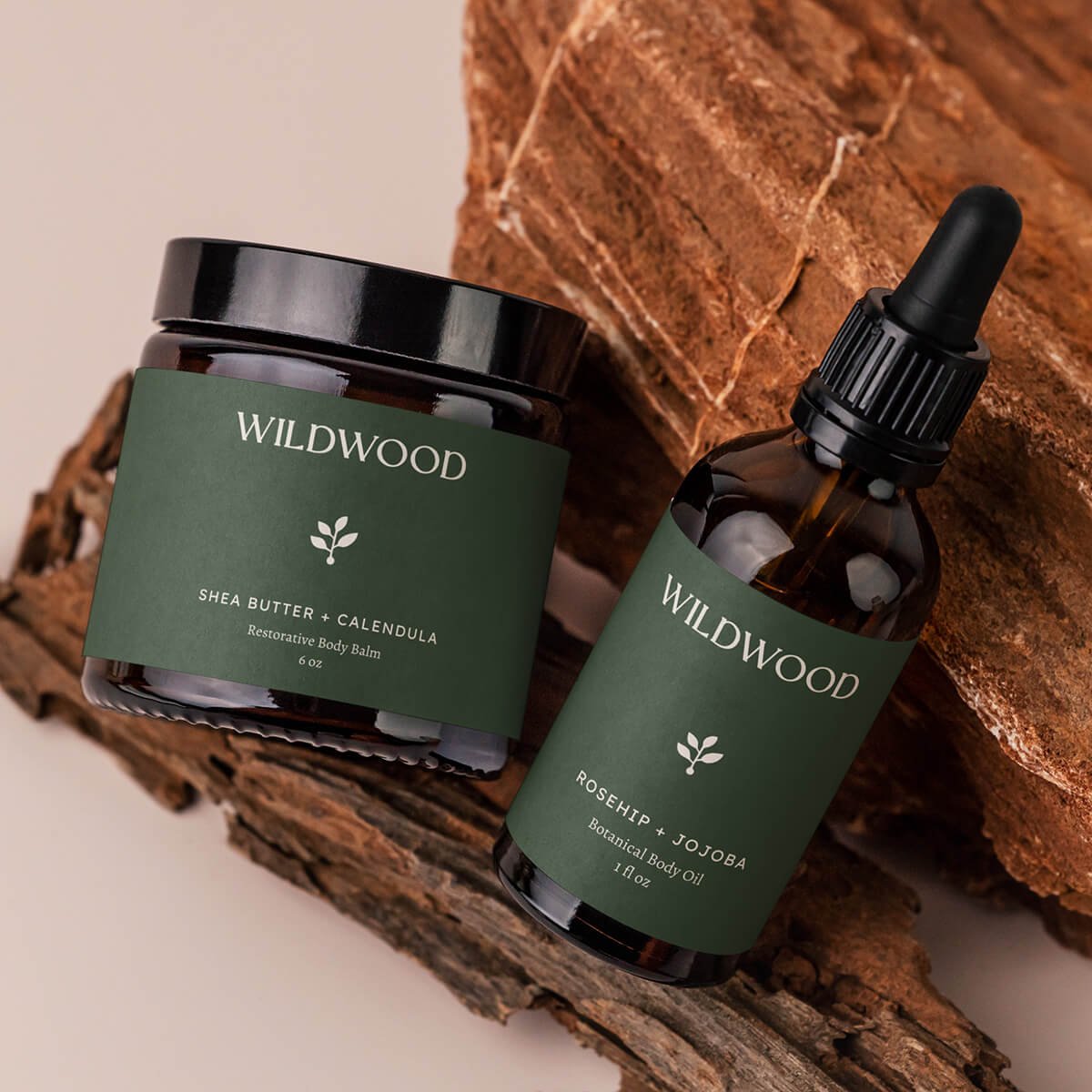
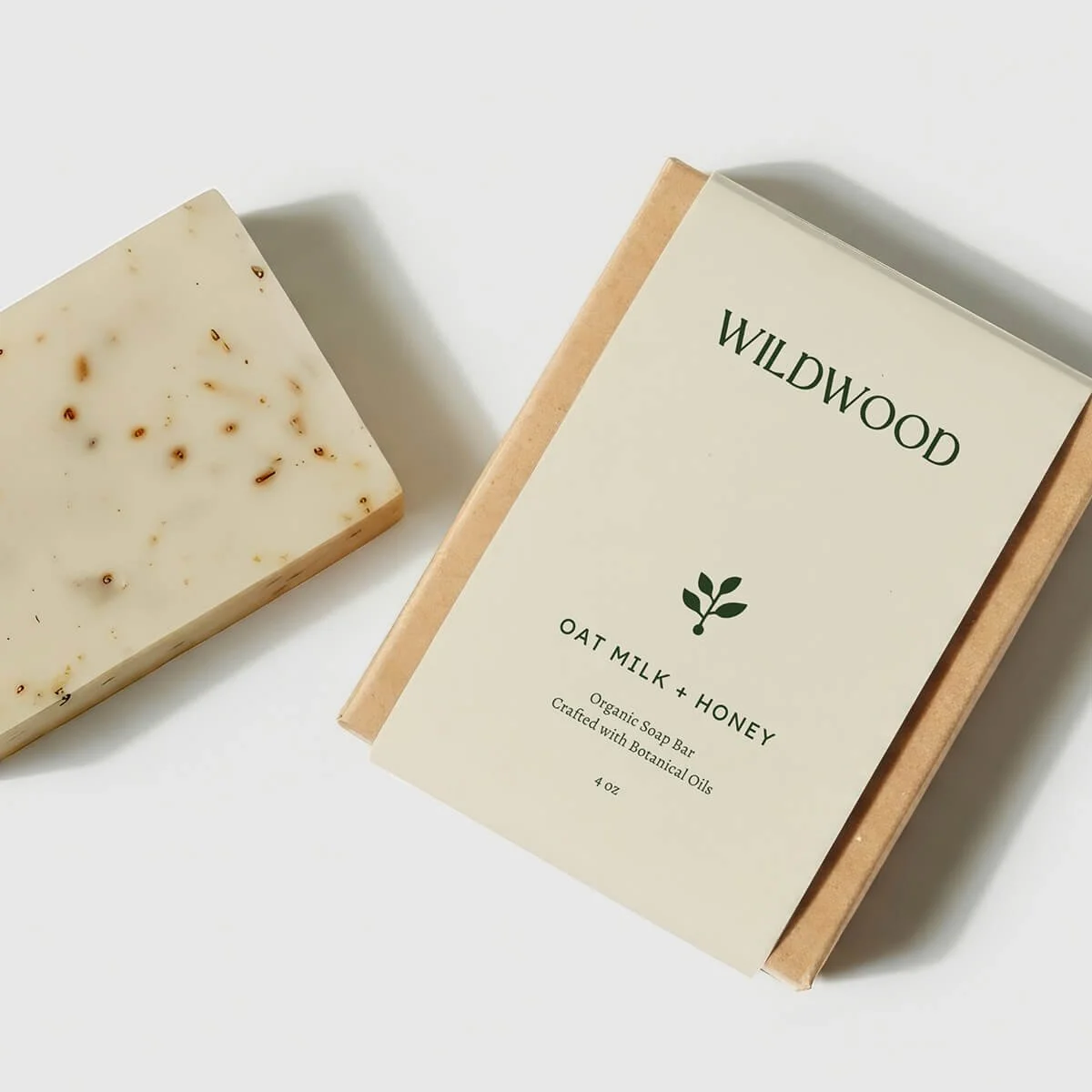
For skincare businesses, your product packaging is the physical manifestation of your brand, so you want to make sure it really captures the essence of your identity. This is the product your customers will have sitting on their nightstand, or that their guests might spot when they walk into the bathroom. So, no pressure! ;)
It's also worth thinking about how all your packaging works together. Your jars, bottles, tubes and boxes should feel like they belong to the same family, rather than a collection of completely unrelated products. For example, you might use the same typography, logo placement and layout across your entire range, but introduce a different accent shade for each formula. That way, each product has its own identity, while still feeling like part of a cohesive collection.
The goal is to create a product range that looks just as beautiful together on a shelf as each individual product does on its own.
10. Create cohesive social media graphics
Social media is often where potential customers discover your skincare brand for the first time. So, your content needs to catch their attention, communicate useful information and give them a reason to find out more about your products.
It's worth thinking about the different types of graphics your business might need. For example:
Product launches and feature highlights.
Skincare tips and educational content.
Ingredient spotlights.
Customer reviews and testimonials.
Promotions, announcements and seasonal campaigns.
This is where having a set of branded templates can be a real lifesaver. Not only does it make creating content that little bit easier, but it also gives you permission to stop trying to keep up with every new design trend and stick to your own brand identity.
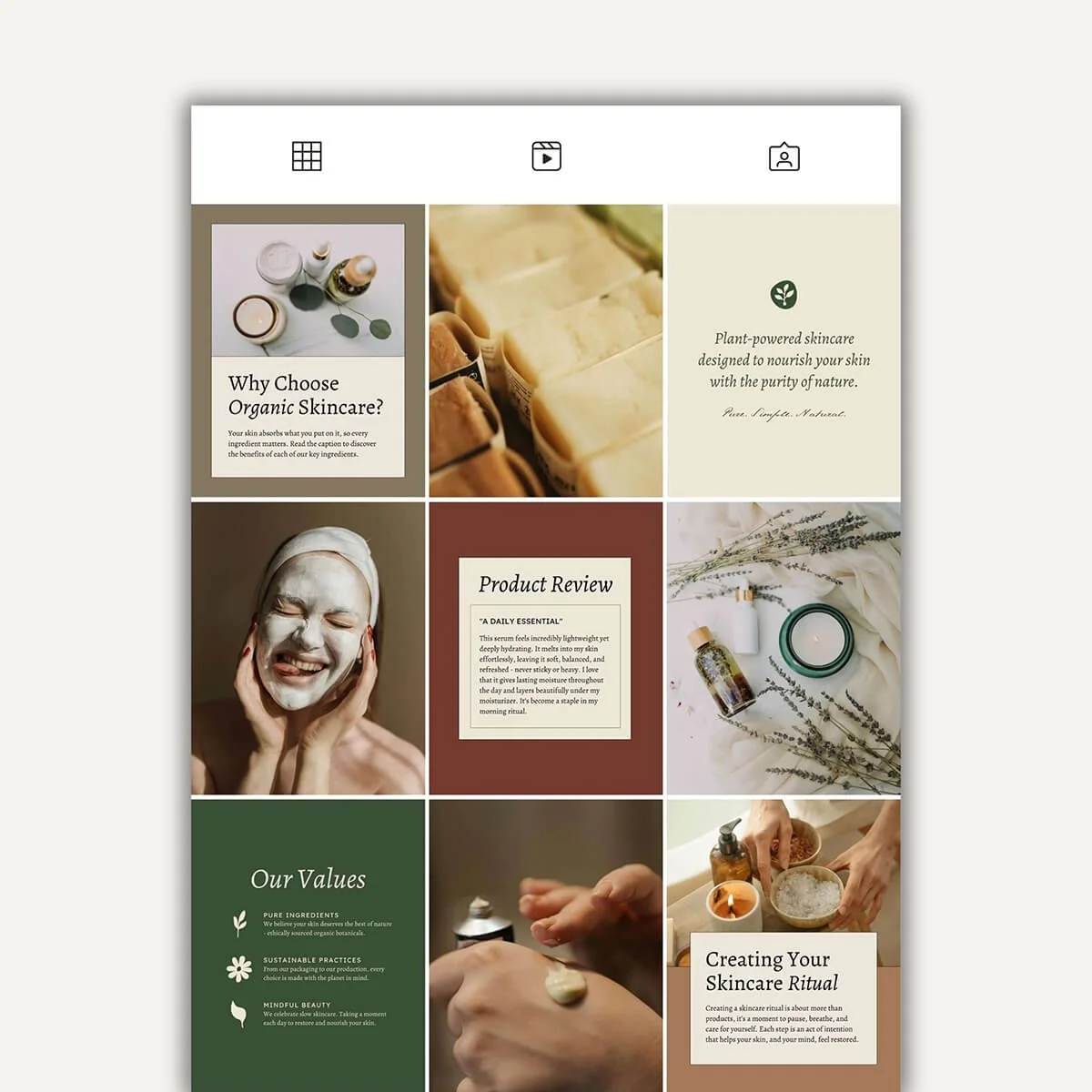
I know it can be tempting to copy the latest trending style, but when it comes to luxury branding, you have to remember that you're playing in a different lane. You don't need to jump on every new trend or completely reinvent your look every few months. You've created something timeless, so let it do its thing!
11. Bring your brand to life with a website
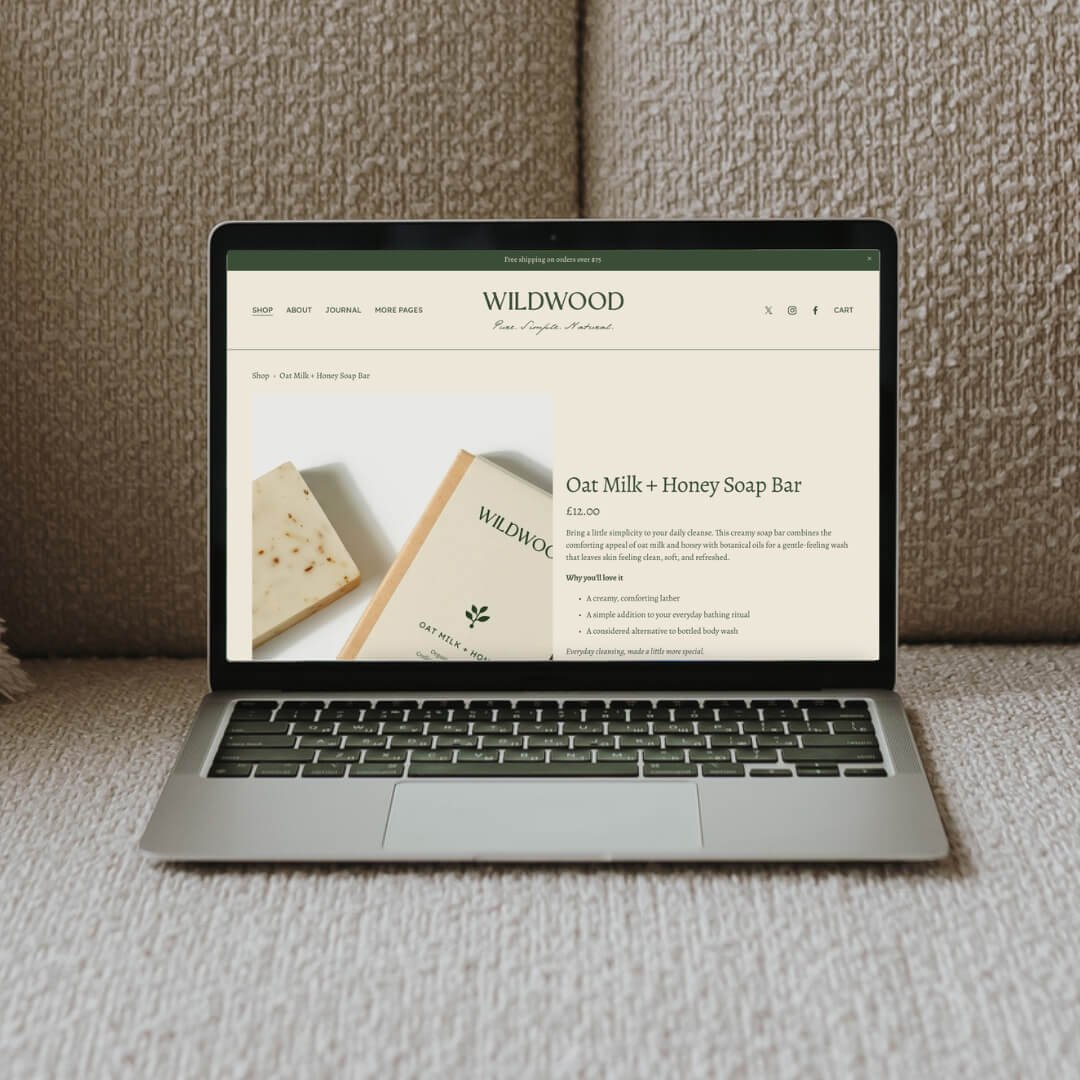
By this point, you've put a lot of thought into creating your visual identity, so you want your website to feel like a natural extension of that. Carry your logo, colors and typography through the design, and use photography that follows the same visual direction as your packaging and social media.
Now, one thing you'll often notice with luxury brands is just how simple their websites are. They're not trying to cram everything onto one page, bombard you with flashing banners or distract you with all sorts of crazy animations. They let the products and imagery do the talking.
Once again, it's a case of less is more. Prioritize clear navigation, plenty of breathing room and an easy browsing experience. Customers should be able to find their way around, explore your product range and find the information they need without having to work for it.
And of course, a beautiful website still needs to function properly. Make sure your product descriptions are clear, your imagery is high quality and the checkout process is straightforward, particularly on mobile.
12. Consider the wider brand experience
Now, let's think a little bigger! Your branding doesn't have to stop at your website or social media. Thinking about how your identity could extend into the real world is a great way to start imagining what your business could look like as it grows.
Depending on how you plan to sell your products, this could include anything from branded shopping bags and shipping materials to retail displays, market stall signage or even your very own storefront.
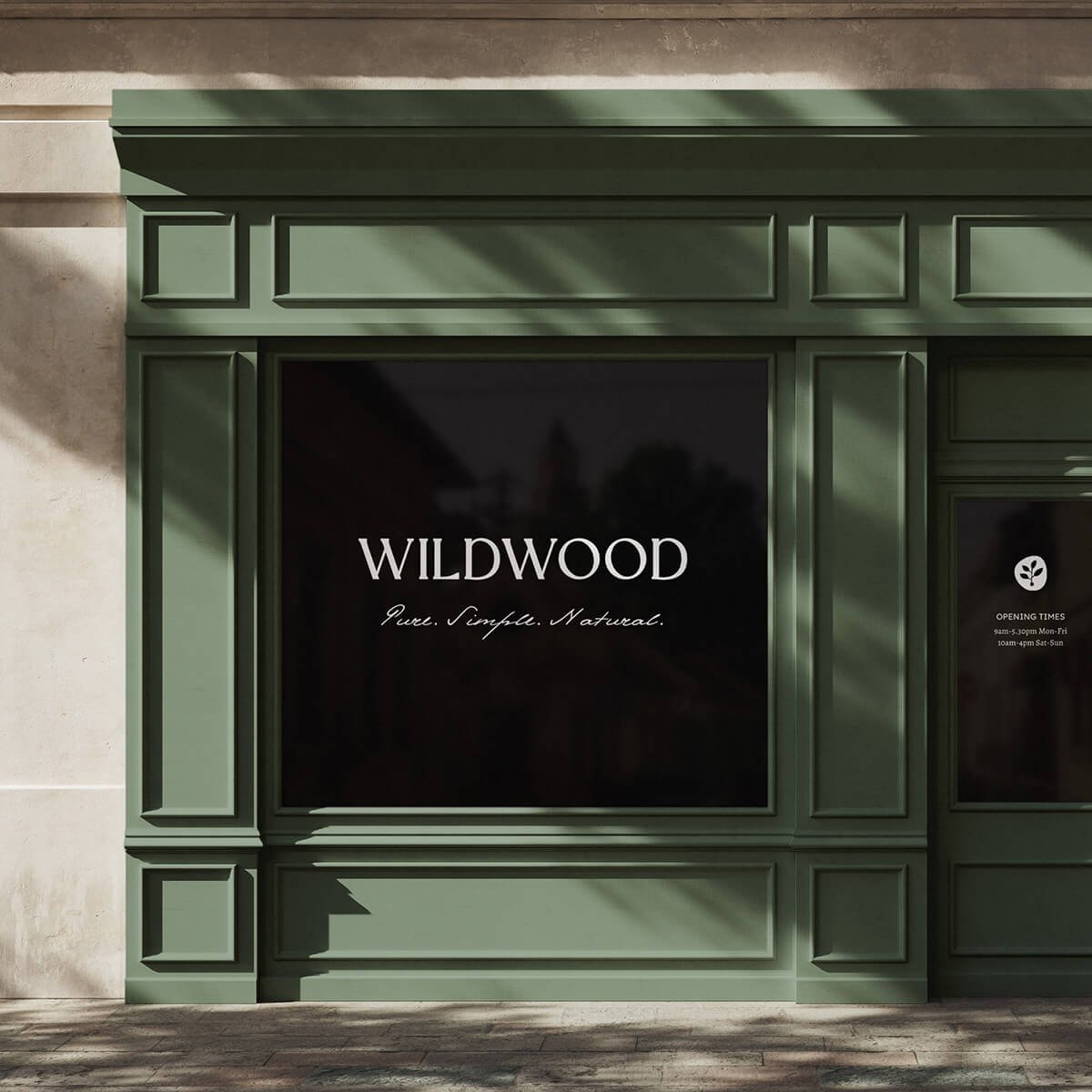
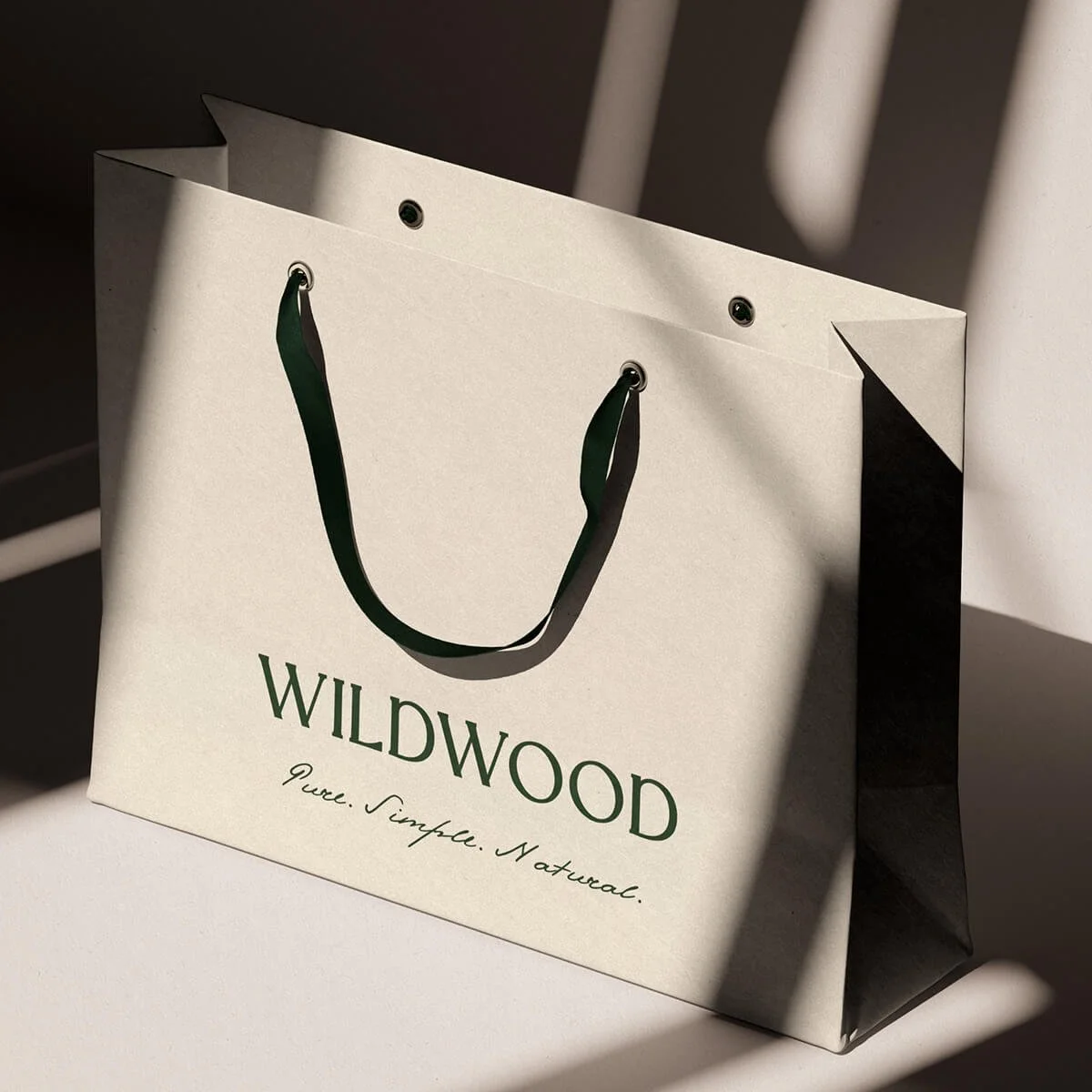
If you're hoping to get your skincare range stocked by independent retailers, for example, think about how your branding might look on shelf displays, signage and other in-store materials. If you're selling directly to customers, you might want to put a little more thought into your shipping boxes, tissue paper and unboxing experience.
Of course, you don't need to create every possible brand application straight away. But having a strong visual identity in place means you've got a foundation to build on as your business grows!
Ready to give your brand a glow-up?
By now, you've probably realized that creating a premium brand identity involves a lot more than just designing a pretty logo. It's all those little details, from your typography and color palette to your packaging, stationery and social media, that come together to create a brand that feels polished, cohesive and professional.
And if you're sitting there thinking you'd love your skincare business to look something like Wildwood, I've got good news. You don't have to start from scratch. I've already done the hard work for you 👇
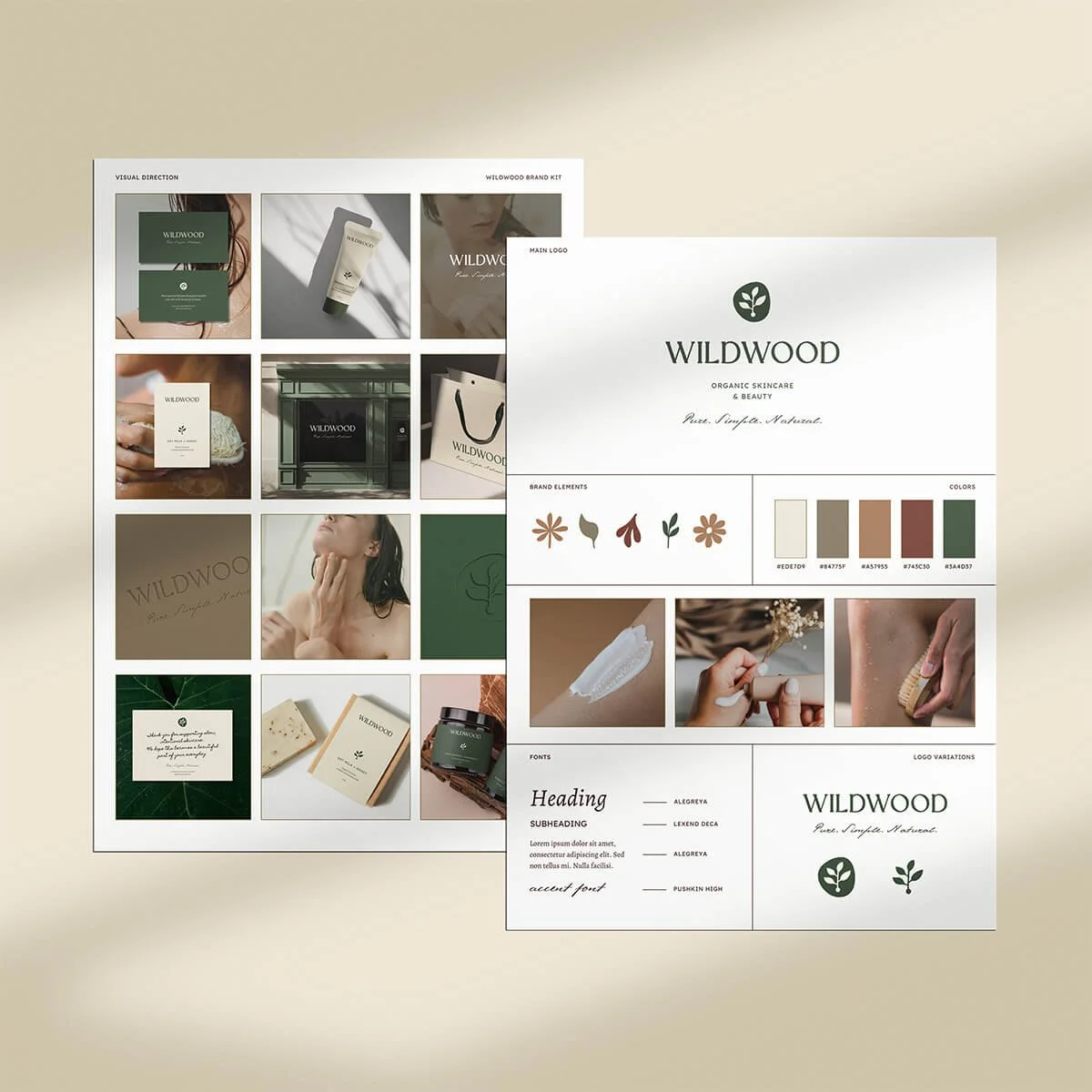
A ready-made brand identity kit
Wildwood is a ready-made brand identity kit designed for skincare and beauty businesses that want to create a beautiful brand without the time, expense or overwhelm of starting from the ground up.
With a coordinated logo suite, carefully selected color palette, font system, supporting graphic elements, stationery designs and social media templates, you've got the foundations of a premium brand ready to make your own!
Want to take a closer look? View the full product details.
A brand that's uniquely yours
You don't have to use Wildwood exactly as it appears here. The beauty of a ready-made brand kit is that you can customize the editable elements to suit your own business. Whether you're changing the business name, tagline, colors or other editable details, you can take the foundations of Wildwood and make them your own.
Imagine having a brand you're genuinely excited to show people. One that feels at home alongside other premium skincare brands, and gives you the confidence to start approaching those retailers you've been dreaming of.
No more piecing together random Canva designs. No more wondering whether your branding looks professional enough. Just a beautifully designed identity that makes your business feel like the real deal.
Ready to make Wildwood yours?
Instant access to your ready-made brand identity.
$229

Meet the Designer
Hey, I'm Joanna, a UK-based brand identity designer and the creative behind JK Creative Co. I love creating brands that look beautiful, feel authentic and help small businesses stand out.
Whether you're looking for bespoke branding to capture the true essence of your business, or a ready-made identity you can customize and make your own, I've got you covered. Whatever stage you're at, I'm here to help you build a brand you're proud to put your name to!